

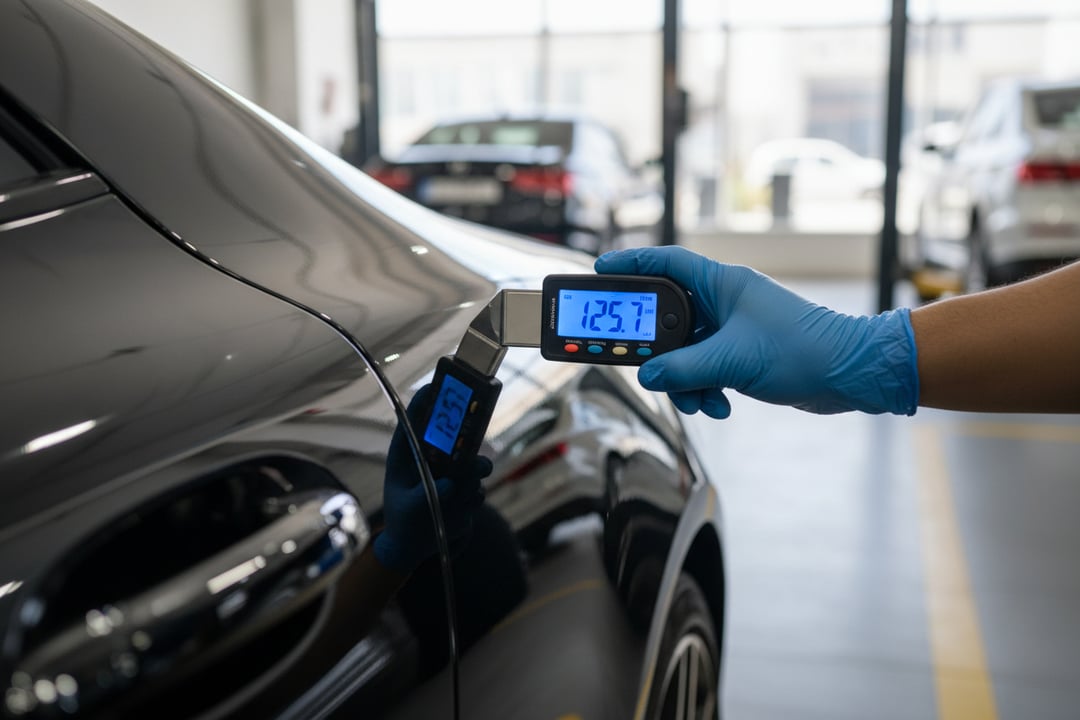
A car can look perfect under showroom lights and still carry a repainted quarter panel that masks a previous collision. That is why body and paint inspection is the longest section in our 410-point report — 38 individual checkpoints covering every exterior surface from the front bumper to the roof pillars.
What Gets Checked: 38 Body and Paint Checkpoints
Our inspectors examine each body panel individually. The front bumper, hood, both front fenders, all four doors, both rear quarter panels, the trunk lid, the rear bumper, the roof, both rocker panels, and all six pillars (A, B, and C on each side) — every one gets its own condition rating and paint reading.
Each panel receives two separate assessments. The condition rating tells you the physical state: No Visible Fault, Dent, Repainted, Repaired, Scratch, Multiple Scratches, Replaced, or Damaged. The paint reading tells you whether the finish is Original, Repainted, or Total Repainted. When a panel shows Repainted on condition and Original on paint, it usually means the panel was refinished after minor damage — but the original factory panel is still there.
Reading Paint Depth: What the Numbers Actually Mean
Inspectors use a paint depth gauge on every panel. Factory paint typically reads between 100 and 150 microns. A reading of 200 or above usually means the panel has been repainted — an extra layer of paint sits on top of the original. Readings above 300 microns suggest body filler was applied before repainting, which points to a more serious repair.
The pattern matters as much as the numbers. If only one panel reads high while the rest are consistent, that single panel was likely repaired after an isolated incident. If the entire left side reads high, the car was probably involved in a side impact. If every panel reads high, the car received a full respray — which could be cosmetic or could be concealing widespread damage.
Structural Clues Hidden in the Body
Body panel alignment tells a story that paint cannot hide. When door gaps are uneven — wider at the top than the bottom, or different on the left side compared to the right — it often indicates that the car has been in a collision significant enough to shift the frame or the mounting points. Our inspectors check panel alignment across the entire vehicle and note any misalignment in the report.
The pillars deserve special attention. The A-pillar (next to the windshield), B-pillar (between the front and rear doors), and C-pillar (behind the rear door) are structural members. If any pillar shows signs of repair, welding, or replacement, it means the car sustained serious structural damage at some point. A repainted pillar on an otherwise original car is a significant red flag.
Corrosion, Trim, and the Details That Add Up
Rust is rare in Dubai but not impossible — cars imported from coastal regions or countries with salted roads can carry hidden corrosion under the paint. Our inspectors rate corrosion from None through Minor, Moderate, to Severe. Even minor surface rust on structural panels deserves attention, because it only spreads with time.
Trim pieces, roof racks, and paint chips round out the body inspection. Loose or missing trim often indicates a rushed repair job. Roof racks are checked for secure mounting and any damage. Paint chips are graded from None to Severe — a few chips on the hood from highway driving are normal, but chips scattered across multiple panels can indicate neglect.
Why This Section Matters Most for Used Car Buyers in UAE
The body and paint section often reveals the true history of a car that looks clean on the surface. A seller might disclose a minor scratch fixed while the inspection report shows three repainted panels and a replaced quarter panel — pointing to a much larger incident. This is the section where the inspection pays for itself, because it turns guesswork into documented evidence.
Every finding goes into your AutoFay report with HD photos and a color-coded summary. Green means original and undamaged. Yellow means minor work has been done. Red means significant repair or structural concern. You get the full picture before you make your decision.
AutoFay inspects 410 checkpoints with HD photos and delivers a detailed PDF report. Our inspectors come to the car — anywhere across all 7 Emirates. Book your inspection at autofay.ae or call +971-54-258-4458.



0 Comments
No comments yet. Be the first to share your thoughts!